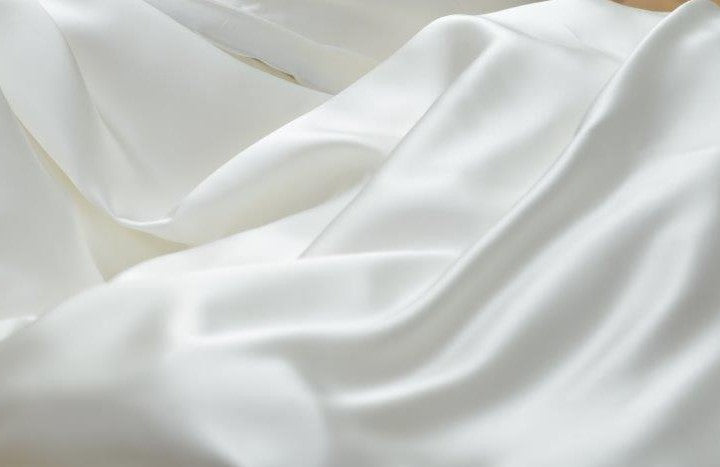


Silk and cotton are among the most popular materials for pillowcases. Both natural fibers are suitable for bed linen, but they differ significantly in terms of surface, feel on the skin, care, and price.
The short answer: A silk pillowcase has a particularly smooth surface, which creates less mechanical friction against the skin and hair. Cotton, on the other hand, is robust, versatile, and usually easier to care for. Which material is better suited therefore depends on personal requirements.
What is the most important difference between silk and cotton?
The most obvious difference lies in the fiber and fabric structure. Silk consists of very fine protein fibers and can be processed into particularly smooth fabrics. Cotton consists of plant-based cellulose fibers and can have very different surface textures depending on the weave.
With a pillowcase, this difference is immediately noticeable because the face and hair come into contact with the fabric for many hours while sleeping.
Silk pillowcase – smooth and supple
A high-quality silk pillowcase has a fine and smooth surface. This allows skin and hair to glide more easily over the fabric when moving during sleep.
The essential advantage lies in the reduced mechanical friction. A smooth sleeping surface can be particularly pleasant for long, curly, dry, or sensitive hair.
However, a silk pillowcase does not fundamentally prevent hair breakage, split ends, or frizz. We explain the effect that a smooth surface can have on hair in detail in our guide "Is a silk pillowcase good for your hair?".
Cotton pillowcase – versatile and uncomplicated
Cotton is a proven material for bed linen and is available in numerous weaves. Depending on the processing, a cotton fabric can be, for example, smooth, soft, firm, or textured.
A major practical advantage of cotton is that it is usually easy to care for. Many cotton pillowcases can be washed at higher temperatures than delicate silk fabrics. However, the respective care label is always the deciding factor.
Cotton is therefore particularly suitable for people who value everyday suitability and easy care.
Silk or cotton in direct comparison
| Property | Silk | Cotton |
|---|---|---|
| Surface | particularly smooth and fine | depends on weave and processing |
| Feel on skin | smooth and supple | from soft to textured |
| Friction on hair | low for smooth silk fabrics | depends on the fabric surface |
| Care | gentle care required | usually more uncomplicated |
| Price | usually higher | wide price range, usually cheaper |
| Material | animal protein fiber | plant-based cellulose fiber |
Silk or cotton for the hair?
Anyone who pays close attention to their hair when choosing a pillowcase should look primarily at the surface.
A smooth silk fabric creates little mechanical friction when you move at night. As a result, the hair is subject to less mechanical stress upon contact with the pillow.
However, this does not mean that cotton is inherently bad for the hair or that silk can prevent hair problems. Hair structure, hair care, chemical treatments, styling, and other factors also play a role.
Silk or cotton for the skin?
The fabric surface is also relevant for the skin. Silk can be processed into very smooth fabrics and therefore feels particularly supple.
Cotton fabrics vary more depending on the yarn, weave, and processing. High-quality cotton sateen, for example, can also have a very smooth surface.
Medical or dermatological effects cannot be derived from the material of a pillowcase alone.
Which material absorbs moisture better?
Both silk and cotton can absorb moisture. However, how a pillowcase feels during sleep depends not only on the fiber, but also on fabric weight, weave, processing, room temperature, and individual sweat levels.
Therefore, it cannot be assumed from the fiber material alone which pillowcase will automatically provide a more pleasant sleeping climate for everyone.
What does Momme mean for a silk pillowcase?
The unit "momme" is often used for silk fabrics. It describes the weight of the fabric and helps to compare silk fabrics of different weights.
However, a higher momme count does not automatically mean better silk quality. Fiber quality, yarn, weaving, dyeing, and processing also influence the quality of the finished pillowcase.
We explain what 19, 22, and 25 momme as well as the 6A designation mean in our guide "What does momme mean for silk? Quality, 6A, and standards explained".
Is sateen better than cotton?
This question is based on a common misunderstanding: Sateen is not a fiber material, but a weave.
Sateen can be made from silk, cotton, or synthetic fibers, for example. A cotton sateen therefore consists of cotton, while silk sateen consists of silk.
When comparing a sateen pillowcase with a silk pillowcase, you should therefore first check which fiber the sateen was actually made from.
How do silk and cotton differ in terms of care?
Cotton is usually easier to care for in everyday life. Depending on the product, cotton bed linen can often be washed at higher temperatures.
Silk, on the other hand, should be treated gently. The information on the care label is decisive. For washable silk pillowcases, a suitable silk detergent and a gentle wash cycle are generally recommended.
You can find detailed instructions under "Washing and caring for silk correctly".
Who is a silk pillowcase suitable for?
A silk pillowcase is particularly suitable for people who value a very smooth and supple fabric surface or who want to keep mechanical friction against hair and skin as low as possible.
Those who are mainly looking for a robust and easy-to-care-for pillowcase, on the other hand, may be better served with cotton.
Conclusion: silk or cotton?
There is no generally better choice. Silk is characterized in particular by its fine, smooth surface. Cotton scores primarily with versatility and usually more uncomplicated care.
For the decision, you should therefore consider what is personally more important: a particularly smooth surface and low mechanical friction or the simplest possible care and everyday suitability.
You can find our various sizes and colors under Silk pillowcases made of mulberry silk.
Frequently asked questions about silk and cotton
Is a silk pillowcase better for the hair than cotton?
A smooth silk fabric creates little mechanical friction when in contact with the hair. This can be pleasant, especially for sensitive, long, or curly hair. However, this does not reliably prevent hair breakage or frizz.
Is silk breathable?
Silk can absorb and release moisture. However, the actual feeling while sleeping also depends on the fabric construction, room temperature, and individual factors.
Is cotton easier to care for than silk?
Generally, yes. Many cotton fabrics can withstand less delicate care than silk. However, the care instructions for the respective product are always the decisive factor.
What is better: 19 or 22 momme?
22 momme initially means a higher fabric weight than 19 momme. It does not automatically follow that the quality is higher. Both fabric weights can be sensible for a pillowcase, depending on the desired feel and fabric construction.
Is sateen the same as silk?
No. Silk is a fiber, sateen is a weave. Sateen can consist of silk, cotton, or synthetic fibers.