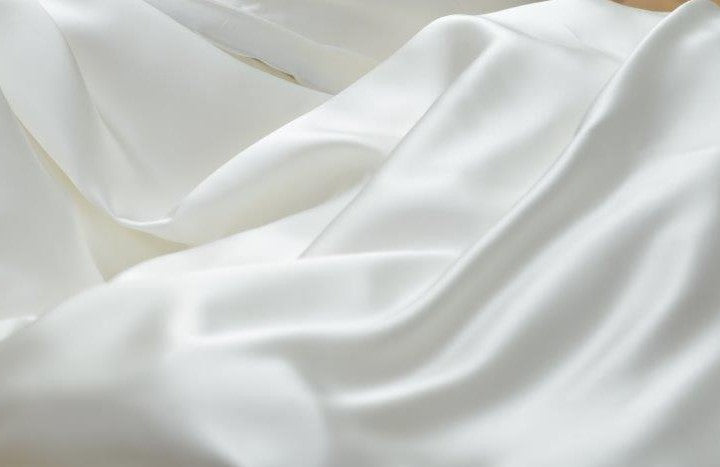


A duvet filling influences the sensation of warmth, weight, drape, and care. Commonly used materials include silk, down, wool or cashmere, and synthetic fibers. Which duvet filling is the best therefore depends primarily on personal warmth requirements and individual needs.
The short answer: Silk is particularly suitable for lightweight and supple duvets, down offers high thermal insulation with low weight, wool has a characteristic warmth and moisture-regulating profile, and synthetic fibers are usually easy to care for.
What types of duvet fillings are there?
The most important filling materials differ significantly in origin, structure, and sleeping comfort:
| Filling material | Typical properties | Suitable for |
|---|---|---|
| Silk | light, supple, can absorb and release moisture | varying warmth needs depending on filling quantity |
| Down | very light with high thermal insulation, voluminous | people who prefer a light yet warm duvet |
| Wool / Cashmere | natural animal fibers with characteristic warmth and moisture-regulating profile | people who prefer natural fibers and a warmer sleeping sensation |
| Synthetic fiber | usually easy-care, various thermal levels available | people for whom simple care is particularly important |
What are the advantages of silk as a duvet filling?
In a silk duvet, the filling consists of many thin layers of silk. This allows for the production of comparatively light and supple duvets.
Silk fibers can absorb moisture and release it back into the environment. However, how warm a silk duvet feels depends primarily on the filling quantity used, the construction of the duvet, and individual thermal sensitivity.
For this reason, silk duvets are available as lightweight summer duvets as well as more heavily filled all-season and winter duvets.
We explain which filling quantity matches which warmth requirement in our guide "Which silk duvet is the right one?".
What are the advantages of down as a duvet filling?
Down has a three-dimensional structure that can trap a lot of air. This allows down duvets to achieve high thermal performance with a relatively low weight.
The sleeping sensation is significantly different from a silk duvet: down duvets are typically more voluminous, whereas silk fillings can be designed to be flatter and more supple.
Which variant is more comfortable depends on personal sleeping preferences and warmth needs.
What are the characteristics of wool and cashmere?
Wool is also used as a natural duvet filling. It can absorb moisture and provides a characteristic, rather warming sleeping sensation.
Cashmere is a particularly fine animal fiber and is also used for high-quality bedding due to its softness and warmth.
Weight, thermal performance, and care differ significantly depending on the type of fiber and processing. Therefore, wool and cashmere cannot be evaluated generally based solely on the material.
What are the advantages of synthetic fiber duvets?
Synthetic fiber fillings are usually made of polyester fibers and are available in numerous constructions and warmth levels.
A significant practical advantage is often the uncomplicated care. Many synthetic fiber duvets can be machine-washed, depending on the manufacturer's care instructions.
The feel of the material, weight, and thermal performance can vary greatly depending on quality and construction.
Which duvet filling is suitable for people who sweat easily?
Those who get warm quickly at night should not only look at the filling material. The filling quantity or warmth level as well as the temperature in the bedroom are particularly important.
For example, a lightweight silk duvet with a low filling quantity can be suitable for warm nights. A heavily filled silk duvet, on the other hand, would be significantly warmer.
The statement "silk is for summer, down is for winter" would therefore be too generalized. Both materials can be processed in different warmth levels.
Which duvet filling is suitable for people who get cold easily?
Those who get cold easily should pay particular attention to sufficient thermal performance. This depends not only on the material but also on the filling quantity, construction, and size of the duvet.
Down can provide high thermal performance at a low weight. Silk duvets can also be produced as winter duvets if a correspondingly larger amount of silk filling is used.
Mulberry silk or wild silk as a duvet filling?
There are also differences within silk fillings. Mulberry silk has fine and relatively uniform fibers. Tussah or wild silk has a different fiber structure and can also be used for bedding.
We explain the differences between the two types of silk in our guide "Mulberry silk or wild silk? Differences and usage explained".
So which duvet filling is the best?
There is no single best duvet filling for everyone. What is decisive is which properties are important to the individual person.
- Silk: if a lightweight, flat, and supple natural fiber filling is preferred.
- Down: if high thermal performance at a low weight and a voluminous sleeping sensation are desired.
- Wool or Cashmere: if natural animal fibers and their characteristic feeling of warmth are preferred.
- Synthetic fiber: if uncomplicated care is a particularly important criterion.
If you are interested in a silk filling, you can find our various summer, all-season, and winter models under Silk duvets with silk filling.
Frequently asked questions about duvet fillings
Which duvet filling is particularly light?
Both silk and down can be used for lightweight duvets. However, the actual weight depends on the filling quantity, size, and construction of the respective duvet.
Which duvet filling is suitable for the summer?
For warm nights, a low warmth level or a small filling quantity is primarily important. Lightweight silk, down, or synthetic fiber duvets can be offered as summer duvets depending on the construction.
Which duvet filling is suitable for the winter?
For cold nights, higher thermal performance is required. This can be achieved with different filling materials. The material, filling quantity, and construction are particularly decisive.
Is silk warmer than down?
This cannot be answered based on the material alone. Down has high thermal performance at a low weight. With silk duvets, the sensation of warmth depends significantly on the amount of silk filling.