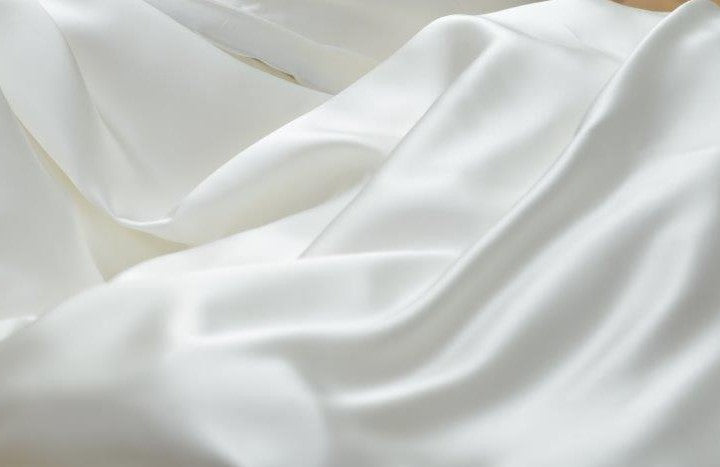


With a silk duvet, it is not just the filling that determines how it feels to sleep. The outer cover also influences how the duvet feels against the skin and how moisture and warmth are perceived.
The short answer: Cotton satin is classic and versatile, silk satin is particularly smooth and light, while Lyocell feels soft and is good at absorbing moisture. Which duvet cover is the best fit therefore depends on the desired feel against the skin, the care required, and personal preferences.
Cotton satin – classic and versatile
Cotton satin consists of cotton woven in a satin weave. This weaving technique creates a smooth surface with a soft feel.
Cotton satin is particularly suitable for people who want to combine a silk filling with a classic cotton cover. The fabric is versatile and relatively uncomplicated in everyday use.
Silk satin – particularly smooth and light
With silk satin, the cover fabric itself is made of silk. The satin weave creates a particularly smooth surface with the sheen typical of silk satin.
Silk satin feels light and supple. Due to the smooth fabric surface, there is only minimal mechanical friction upon contact with the skin.
For silk fabrics, the fabric weight is often stated in momme. A higher momme count does not automatically mean higher quality.
We explain what 19, 22, or 25 momme as well as the term 6A actually mean in our guide "What does momme mean for silk? Quality, 6A, and standards explained".
Lyocell – soft and moisture-regulating
Lyocell is an industrially manufactured cellulose fiber. The raw material is cellulose, which is often derived from wood and then processed into fibers.
Lyocell can absorb moisture well and has a soft, smooth surface. This makes the material suitable as a light and pleasant outer cover for a silk duvet.
Comparing Lyocell, cotton satin, and silk satin
| Material | Feel against the skin | Characteristics | Care |
|---|---|---|---|
| Cotton satin | soft and smooth | classic and versatile | relatively uncomplicated |
| Silk satin | particularly smooth and supple | light and delicate | requires gentle care |
| Lyocell | soft and smooth | light, good moisture absorption | observe product care instructions |
Which duvet cover is right for me?
Cotton satin is particularly suitable if you prefer a classic and versatile cover fabric.
Silk satin is interesting if a particularly smooth, delicate, and light fabric surface is important to you.
Lyocell is suitable if you are looking for a soft and light cover fabric with good moisture absorption.
What is more important: duvet cover or filling?
The cover and filling fulfill different functions. The cover fabric primarily influences the feel against the skin and the characteristics of the outer fabric surface. The filling, on the other hand, essentially determines the weight, drapability, and thermal performance of the duvet.
With a silk duvet, the same type of silk filling can therefore be combined with different outer materials. This creates duvets with different fabric feels, even though there is silk inside each one.
We explain which filling quantity is suitable for summer, transitional seasons, or winter in our guide "Which silk duvet is the right one? Filling and differences".
Is silk satin the same as silk?
Not quite. Silk refers to the fiber, while satin refers to a weaving technique. Satin can therefore be made from different fibers.
In the case of silk satin, the fabric is made of silk and woven in a satin weave. Cotton satin, on the other hand, consists of cotton, although both fabrics can have a smooth surface due to their weave.
Which cover is suitable for a silk duvet?
All three materials can be sensibly combined with a silk filling. Therefore, the decisive factor is less a question of an generally "best" cover fabric and more about the desired sleep and skin feel.
Those who prefer a classic cover can choose cotton satin. Silk satin is an option for a particularly smooth surface. Lyocell offers a soft surface and good moisture absorption.
Conclusion: Lyocell, cotton, or silk?
Cotton satin, silk satin, and Lyocell differ primarily in their surface, material feel, moisture absorption, and care requirements. None of the three cover fabrics is fundamentally the best choice for everyone.
The silk filling itself is just as important as the cover fabric. The filling quantity and construction significantly determine whether a duvet is suitable as a summer, year-round, or winter duvet.
You can find our various combinations of silk filling and cover fabrics under Silk duvets with silk filling.
Frequently asked questions about duvet covers
What is the difference between silk satin and cotton satin?
Both fabrics can be woven in a satin weave but consist of different fibers. Silk satin is made of silk, cotton satin of cotton. Satin refers to the weaving technique and not automatically to the material used.
Is Lyocell a natural fiber?
Lyocell is based on cellulose, but it is not a natural fiber in the strict sense. The cellulose is dissolved industrially and then processed into new fibers.
Is silk satin better than cotton satin?
Not fundamentally. Silk satin has a particularly smooth and delicate surface. Cotton satin, on the other hand, offers a classic fabric feel and is usually more uncomplicated in everyday use. Which variant fits better depends on personal requirements.
Is Lyocell better than cotton?
There is no general winner here either. Lyocell is characterized by a soft surface and good moisture absorption. Cotton is versatile and familiar to many people from bedding products. The choice depends on the desired feel of the fabric.
Does the cover determine how warm a duvet is?
The cover fabric influences the sleeping experience, but it is not solely responsible for the thermal performance. The filling material, filling quantity, and construction of the duvet are particularly important.