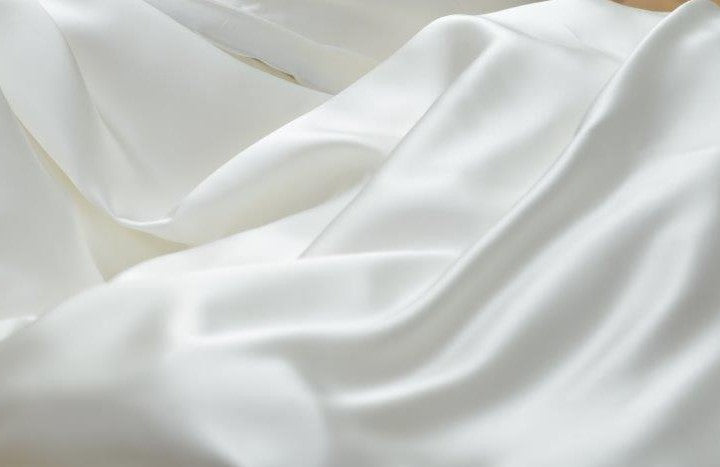


A silk duvet is created in several steps: from the rearing of silkworms to the silk cocoon, and finally processing the silk fibers into a multi-layered fleece. Unlike many loose filling materials, the silk is built up in thin, large-area layers.
The short answer: Silk cocoons are processed for a silk duvet, the silk fibers are pulled apart into fine fleeces, and many of these layers are then stacked on top of each other. This creates an even, light, and cozy duvet filling.
1. Mulberry leaves as food for the silkworm
The production of mulberry silk begins with the mulberry tree. Its leaves serve as food for the larvae of the silkworm moth.
During their growth phase, the silkworms consume large quantities of mulberry leaves before they begin to form their cocoons.

2. From silkworm to cocoon
After its growth phase, the silkworm begins to surround itself with a fine silk filament. This gradually creates the silk cocoon.
This cocoon forms the basis for the further processing of the silk.


3. The silk cocoon
The cocoon consists of silk filaments produced by the silkworm. For the production of a duvet filling, the cocoons are subsequently processed further.
Unlike the production of fine silk fabrics, the focus of a silk duvet is not on spinning and weaving a cloth. Instead, the goal is to produce large-area, thin layers of silk for the duvet filling.
4. How is the cocoon turned into a duvet filling?
The prepared cocoons are opened and the silk fibers are carefully pulled apart. This initially creates smaller silk surfaces from which a larger fleece can then be built.
This step is crucial for the final structure of the filling: the silk is not simply put into the duvet loose, but is processed into coherent layers.
5. The silk fibers create a silk fleece
The prepared silk fibers are pulled apart further and processed into thin, flat fleeces.
These silk fleeces form the basis of the final duvet filling.

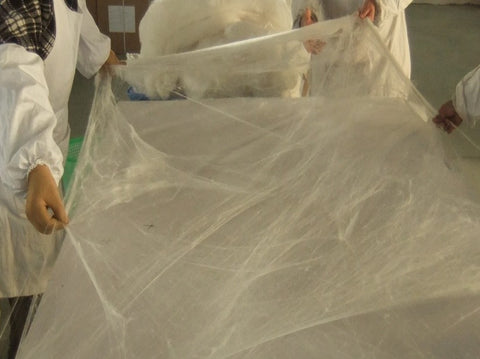
6. The silk fleece is pulled apart
For the size of a duvet, the silk layers are carefully pulled apart in length and width. This creates a thin, large-area layer.
This process is repeated until there are enough individual silk layers for the desired filling weight.
7. Many thin silk layers form the filling
A silk duvet does not consist of a single thick layer of silk. Instead, many thin silk layers are stacked on top of each other.
Through this multi-layered construction, the filling is distributed evenly over the area of the duvet.
How warm the finished duvet becomes depends significantly on the amount of silk used. A light summer duvet requires less filling material than an all-season or winter duvet.
8. The silk filling is incorporated into the casing
After the desired filling amount is reached, the multi-layered silk fleece is incorporated into the outer casing of the duvet.
Depending on the model, the casing can consist of cotton sateen, lyocell, or silk sateen, for example. Finally, the duvet is sewn and inspected.

Video: How a silk duvet is created
In the following video, you can see how the silk filling is prepared, pulled apart, and processed into a duvet:
Which silk is used for silk duvets?
Different types of silk can be used for silk duvets. Mulberry silk has fine and relatively uniform fibers and is suitable for soft, cozy fillings. Tussah or wild silk is also used for certain bedding products.
We explain the differences between the two types of silk in our guide "Mulberry Silk or Wild Silk? Differences and Use Explained".
What is the difference between a silk duvet and silk bedding?
With a silk duvet, the silk is in the filling. The outer casing can be made of a different material such as cotton sateen or lyocell.
With silk bedding, on the other hand, the bed linen itself is made of silk fabric and lies directly against the skin.
You can find our bed linen made from silk fabric under Silk Bedding made from Mulberry Silk.
Does more silk automatically mean a better duvet?
No. More filling material primarily means a warmer and heavier duvet, not automatically higher quality.
Quality is determined by factors such as the silk used, the structure and evenness of the filling, the outer casing, and the craftsmanship of the duvet.
The unit "momme," which is frequently used for silk fabrics, should also not be confused with a general quality grade. Momme initially describes the weight of the fabric.
We explain what momme, 6A, and various quality features mean for silk in our guide "What does momme mean for silk? Quality, 6A, and standards explained".
How do summer, all-season, and winter duvets differ?
The basic production process is similar. The main difference lies in the amount of silk filling used.
A light summer duvet requires less silk, while a correspondingly larger number of silk layers are built up for an all-season or winter duvet.
We explain which filling amount matches which warmth requirement in our guide "Which silk duvet is the right one? Filling and differences".
Conclusion: From cocoon to finished silk duvet
The production of a silk duvet involves several steps: the silkworm forms its cocoon, the silk is prepared from it for further processing, pulled apart into thin fleeces, and then built up into an even duvet filling in many layers.
The amount of silk filling largely determines the warmth level of the finished duvet. Quality, however, is created by the combination of the silk material, the structure of the filling, the outer casing, and the craftsmanship.
You can find our various summer, all-season, and winter models under Silk duvets with silk filling.
Frequently asked questions about the production of silk duvets
What does the filling of a silk duvet consist of?
The filling consists of silk fibers that are processed into thin, large-area fleeces and stacked in several layers on top of each other.
Is the silk filled into the duvet loosely?
Not with the traditional processing described. The silk fibers are pulled apart into coherent fleeces and built up in layers.
Why do summer and winter duvets have different filling weights?
The thermal performance of the duvet changes as the filling amount increases. This is why light summer duvets contain less silk filling than all-season or winter duvets.
Is a duvet with more silk automatically higher quality?
No. A larger filling amount primarily means a different warmth level. The quality also depends on the silk material, the structure of the filling, the outer casing, and the craftsmanship.