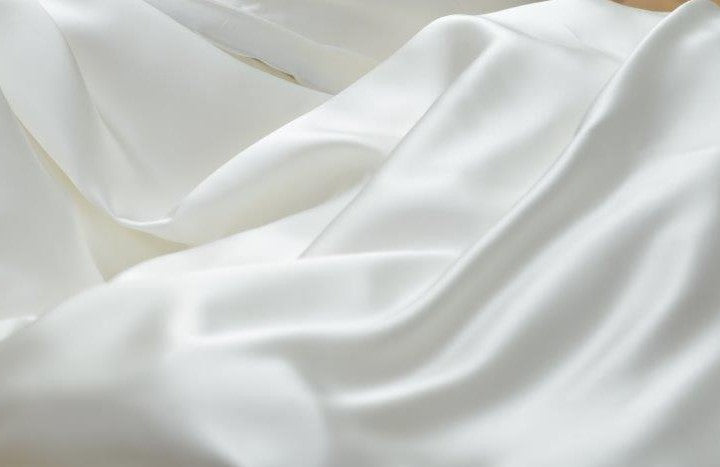


How is silk actually made?
Silk is one of the oldest and most fascinating natural materials in the world. Yet few know how elaborate its production truly is.
From the silkworm to the silk cocoon and the finished silk duvet – each step requires experience and craftsmanship.
The Beginning: Silkworm and Mulberry Tree
The climate in East China is ideal for silk cultivation: warm, sunny, and characterized by large mulberry tree plantations.
The silkworm feeds exclusively on the leaves of the mulberry tree. After hatching, it grows quickly and, after about 30 days, begins to spin a fine thread.
This thread forms the silk cocoon.

(Mulberry leaves)

(Silkworms)

(Silkworm breeding)
Silk Cocoon: The Basis for High-Quality Silk
In most cases, each silkworm forms its own cocoon. These "single cocoons" are particularly valuable because their threads are uniform and long.
However, there are also cocoons in which several silkworms spin together. The fibers in these are irregular and cannot be reeled.
👉 These are often used for the filling of silk duvets.


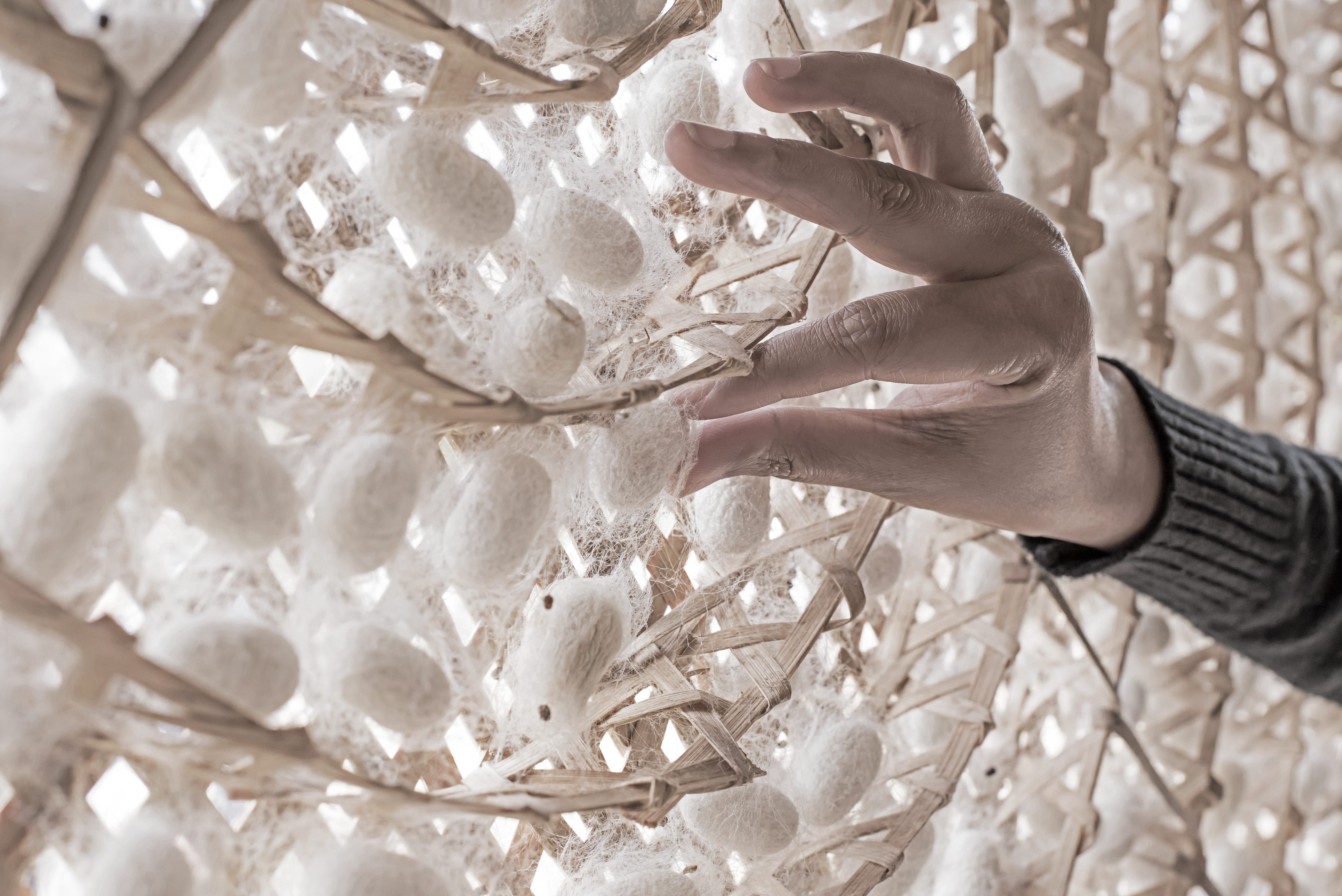
Extracting the Silk Fibers
Extracting the silk fibers is an elaborate process:
-
The cocoons are soaked and boiled
-
The fibers are carefully loosened
-
They are then brushed and processed into a fine fleece
The result is a natural white, slightly shimmering silk fleece, which serves as the basis for many silk products.

(Dried silk fleece)
Processing into a Silk Duvet
The silk fleece is evenly stretched in all directions – similar to a net.
Depending on the desired weight, several layers are placed on top of each other. This work requires a lot of experience and precision.
The finished silk filling is then placed into a cover and secured at the edges so that nothing slips.
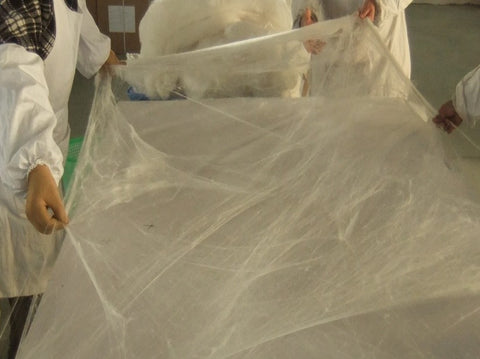
(Stretching and layering the silk fleece)

(Checking the sewing process)
This is how a mulberry silk duvet is traditionally handcrafted:
Each silk duvet is meticulously handcrafted – from stretching the silk fleece to the final processing.
This intricate manufacturing process shows why high-quality silk duvets are particularly durable, lightweight, and comfortable.
Conclusion: Craftsmanship and Natural Material in Perfect Combination
The production of silk is a complex and traditional process that requires a lot of experience.
Precisely for this reason, products made from real silk – such as mulberry silk duvets – are considered particularly high-quality and durable.
If you want to experience the difference for yourself, it's worth checking out high-quality products made from genuine mulberry silk.
→ Here you can find silk duvets made from pure mulberry silk:
https://orignee.de/collections/seidendecken
❓ FAQ
How long does a silkworm live?
Its life cycle is about 30 days before it spins its cocoon.
What is a silk cocoon?
A cocoon consists of a long, fine silk thread that the silkworm itself produces.
Why are some silk cocoons not reelable?
If several silkworms form a cocoon, the fibers are irregular and cannot be obtained as a long thread.
What is silk fleece used for?
Silk fleece is often used as filling material for silk duvets.